My Store
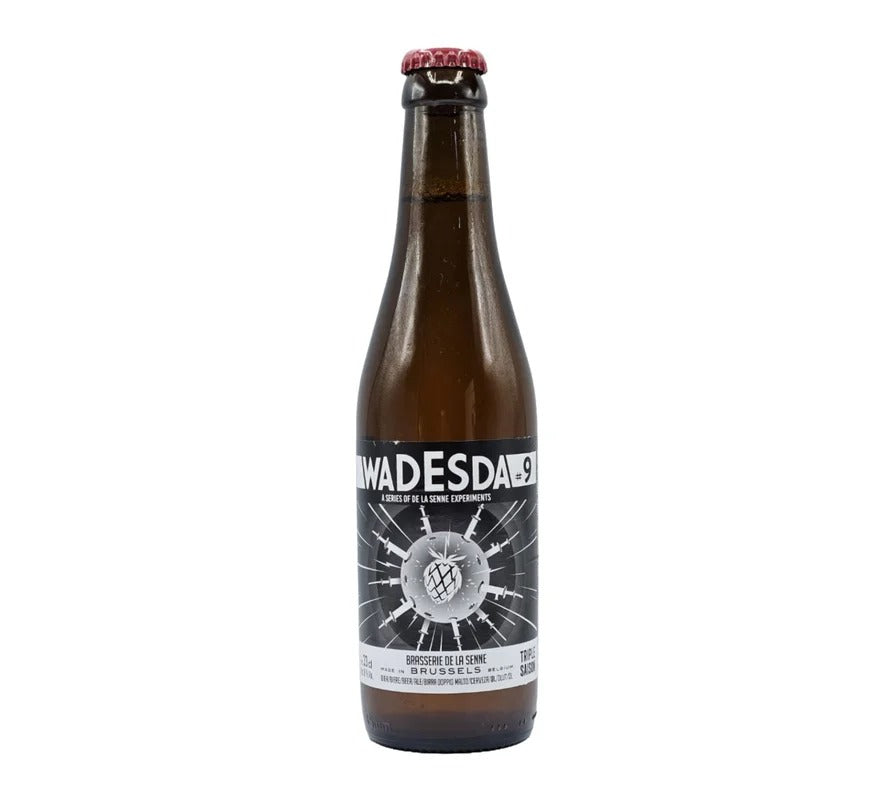
De La Senne Wadesda #9 11.2 oz bottle
De La Senne Wadesda #9 11.2 oz bottle
Couldn't load pickup availability
De La Senne Wadesda #9 11.2 oz.
Belgian Tripel Saison
Brewed by: Brasserie De La Senne
Country: Belgium
Style: Saison
ABV (Alcohol by Volume): 8%
BeerAdvocate.com rating: 90
Wadesda #9 (ABV 8%) from
Brasserie De La Senne is a combination of Jambe de Bois and Cantillon lambic. Cantillon is a neighboring brewery in Brussels. The combination is a vinous yet dry tripel saison. It pours straw gold with white foam. Nose is bubblegum, moderate acidity and light coriander. Flavors follow the nose along with cracker, green apple, white pepper and lemon zest. Mouth feel is medium with medium carbonation. Finish is tart and dry. 11.2 oz capped bottle.
“Wave after wave of deliciously bracing, light champagne-like funk, all held together with the usual De La Senne skill. For me, this beer is more like a Bière de Champagne than some Bière de Champagnes, and the vinous, dry ending cements that feeling. Full of white grape and white wine notes, the beer’s carbonation is perfect (a De La Senne hallmark of course), and it breaks over the tongue again and again, delivering each second it’s in the mouth.” Ding’s Beer Blog
This is #9 of an experimental series since 2014. (Wadesda means experiment.)
Brewery Information:
La Brasserie De La Senne or
De Zennebrouwerij is named for the river Zenne which flows through Brussels, where the brewery is located. Founded by Bernard Leboucq and Yvan De Baets, the brewery has a reputation for brewing fine ales and “frustratingly rare blends” that often include lambic from the nearby Cantillon Brewery.
Leboucq and De Baets do everything themselves, using traditional methods. The beers are neither filtered nor pasteurized, and no additives are used. Their philosophy is to brew beers that are characterful, but not necessarily strong. With an annual production of 1,800 hectoliters, the demand for the beers currently exceeds production capacity.
Share